Table of Contents
- How Long Does a Master Bathroom Remodel Take?
- Planning and Design Phase: Setting Your Foundation
- Permits, Inspections, and Pre-Construction Preparation
- Your Bathroom Renovation Timeline: Week-by-Week Breakdown
- Bathroom Remodel Checklist for Homeowners
- Creating Your Bathroom Remodel Project Schedule
- What Delays Your Master Bathroom Remodel and How to Avoid Them
- Keeping Your Bathroom Usable During Construction
- Frequently Asked Questions
Last Updated: October 14, 2026
How Long Does a Master Bathroom Remodel Take?
A master bathroom remodel timeline typically ranges from 8 to 13 weeks for a full renovation, depending on scope and complexity.
The timeline you hear about often excludes weeks spent planning and waiting for permits, when someone says “a bathroom remodel takes 6 weeks,” they mean active construction only. The real master bathroom remodel timeline starts the moment you decide to renovate.
Factors That Determine Your Project Length
Several variables control your project length. Scope is the primary driver: a simple refresh moves faster than a gut renovation with structural changes. Layout modifications, especially moving plumbing lines, add weeks.
Material lead times are critical: custom cabinetry, specialty tile, and high-end fixtures can take 4 to 8 weeks to arrive.
Hidden damage found during demolition can add 1 to 3 weeks, water damage, structural rot, or outdated wiring requires remediation before moving forward.
Planning and Design Phase: Setting Your Foundation
Start with an initial consultation and site assessment: a designer or contractor walks through your space, photographs it, takes measurements, and discusses your goals.
Once you’ve settled on a design direction, detailed planning begins: construction documents, material and workmanship specifications, and a project schedule.
Material selection happens during this phase. Choosing tile, paint, hardware, fixtures, and finishes requires showroom visits and sample reviews, small decisions that compound.
Permits, Inspections, and Pre-Construction Preparation
Permits and pre-construction preparation typically take 4 to 8 weeks, depending on your local building department and the complexity of your project.
Permit applications require construction documents, site plans, and sometimes engineering drawings for structural changes.
Once permits are issued, pre-construction preparation begins: utility disconnections, dumpsters, job-site access, and space prep, typically 1 to 2 weeks.
A pre-construction meeting with your contractor, designer, and key tradespeople clarifies expectations and confirms the schedule, typically 1 to 2 weeks before demolition starts.
Your Bathroom Renovation Timeline: Week-by-Week Breakdown
A realistic master bathroom remodel timeline breaks into four construction phases. This week-by-week framework shows what’s happening, when to expect disruption, and when decisions are needed.
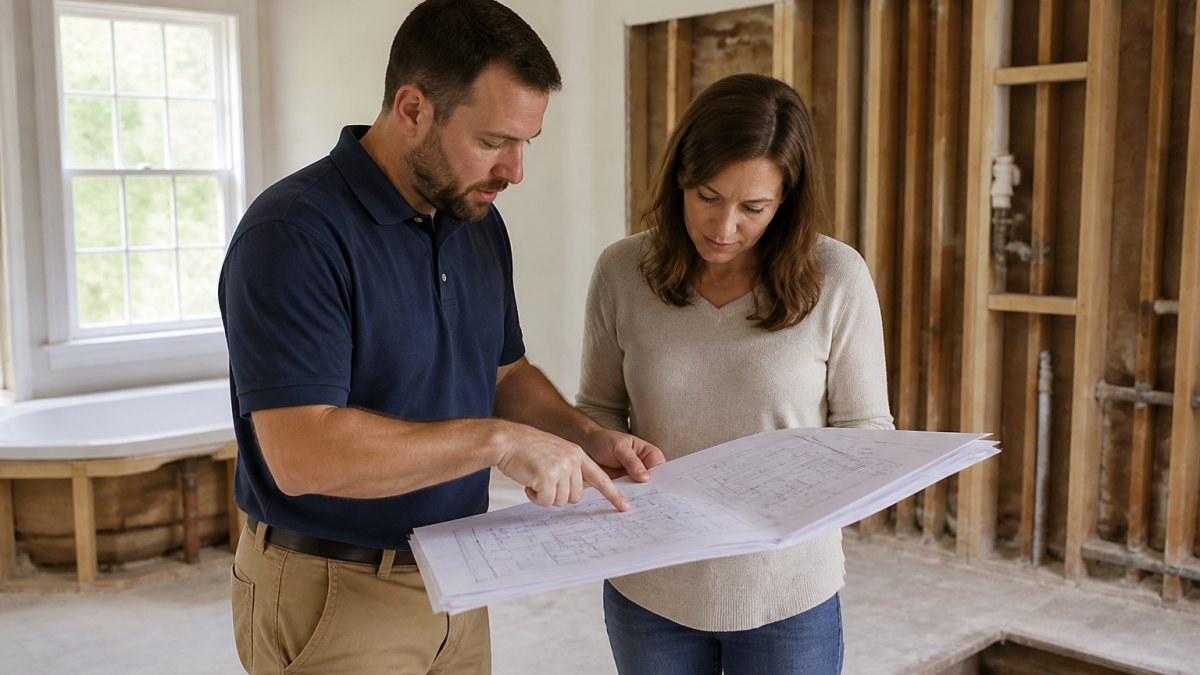
Weeks 1-3: Demolition and Rough Work
Demolition is the most disruptive phase, typically 1 to 2 weeks. Your contractor removes fixtures, cabinetry, flooring, and wall finishes. Tile removal takes longer, old tile and adhesive are labor-intensive.
Rough plumbing and electrical follows, usually another 1 to 2 weeks: new water lines, drain lines, and circuits installed before walls close. This phase requires building department inspection.
Framing adjustments, if needed, happen here. Removing walls, reinforcing headers, or adjusting ceiling heights requires a framing contractor and structural approval.
Weeks 4-7: Plumbing, Electrical, and Framing
Plumbing continues with fixture rough-ins, the pipes and fittings connecting your shower, toilet, and vanity. Electrical rough-in installs wiring for outlets, lighting, and ventilation fans.
Waterproofing preparation begins for large or steam showers. Membranes and schluter systems go up before tile, requiring careful installation.
Wall preparation happens in parallel: drywall hung, taped, and mudded. If you’re relocating plumbing or electrical, walls may need opening and patching. This sets the stage for finishing surfaces.
Weeks 8-10: Waterproofing, Tile, and Fixtures
Tile installation is the most visible phase, typically 2 to 3 weeks depending on extent. Large-format tiles and complex patterns take longer than subway tile.
Fixture installation begins as tile finishes: vanities, toilets, and shower doors go in, plumbing connections are completed, and electrical fixtures like lighting and exhaust fans are mounted. This usually takes 1 to 2 weeks.
Paint and wall finishes happen here: walls primed and painted, wallpaper or specialty finishes applied. Paint curing takes 24 to 48 hours before the next phase.
Weeks 11-13: Finishing Touches and Final Inspection
Hardware installation, towel bars, mirrors, soap dispensers, and cabinet hardware, completes the aesthetic phase. This takes 2 to 3 days, scheduled during the final week.
Caulking and sealant protect tile joints from water intrusion, and grout is sealed if appropriate for your tile. Touch-ups and final adjustments happen here.
A final walkthrough identifies punch list items, small details needing correction. Most punch lists take 1 to 2 weeks. A final building department inspection certifies code compliance; once approved, your bathroom is ready.
Bathroom Remodel Checklist for Homeowners
A structured checklist keeps your master bathroom renovation timeline on track. Breaking the project into pre-construction, during-construction, and post-construction phases keeps you organized.
Contact Us For A No-Cost, No-Obligation Consultation →
Pre-Construction Checklist
- Define your vision and create a mood board of styles and finishes you like
- Establish a realistic budget and identify your non-negotiables
- Interview and select a designer and contractor
- Finalize design and create detailed construction documents
- Select all materials, fixtures, and finishes
- Apply for building permits and obtain approval
- Schedule utility disconnections if needed
- Arrange for dumpster rental and job-site access
- Confirm the construction start date and timeline with your contractor
- Arrange temporary bathroom access during construction
During Construction Checklist
- Attend the pre-construction meeting with your contractor and trades
- Review and approve rough-in inspections before walls close
- Inspect tile work and layout before grouting
- Confirm all fixture installations match your design
- Review paint and finish colors in the actual space
- Walk through the space weekly and document any concerns
- Approve any change orders in writing before work proceeds
- Schedule the final inspection with the building department
Post-Construction Checklist
- Complete a final walkthrough with your contractor
- Address any punch list items before final payment
- Obtain a final inspection sign-off from the building department
- Collect all warranties and maintenance documentation
- Photograph the finished space for your records
- Review care instructions for tile, grout, and finishes
- Schedule any required follow-up maintenance or sealing
Creating Your Bathroom Remodel Project Schedule
Your master bathroom remodel timeline must account for dependencies, tasks that can’t start until others finish.
Map backward from your desired completion date, working through each phase.
Account for material lead times early.
Build in 1 to 2 weeks of buffer for inspections.
Coordinate with your contractor on labor availability. If they have other projects, your bathroom may not get full-time attention.
Document the schedule in writing. Capitol Design provides clients a detailed project schedule showing each phase, key milestones, and inspection dates.
What Delays Your Master Bathroom Remodel and How to Avoid Them
Most delays fall into predictable categories. Understanding them lets you plan defensively and minimize disruption to your master bathroom remodel timeline.
Material and Fixture Lead Times
Custom cabinetry, specialty tile, and high-end fixtures often have 4 to 8 week lead times. Ordering after construction starts delays the entire project. Order long-lead items during design, as soon as selections are finalized, and track order dates, expected delivery, and confirmation numbers in a spreadsheet.
Verify delivery dates 2 weeks before expected arrival, suppliers sometimes push dates back without notice. Catching delays early lets you adjust the schedule or source alternatives.
Hidden Damage and Structural Issues
Water damage, mold, or outdated wiring found during demolition can add 1 to 3 weeks. You can’t prevent these surprises, but you can plan: budget 5 to 10 percent contingency time and reserve funds for repairs. Ask your contractor about common issues in homes of your age and type during the initial consultation.
Permit and Inspection Delays
Building departments vary widely: some approve permits in 2 weeks, others take 6 to 8 weeks. Call yours to ask about typical timelines and submit applications early, even if construction won’t start immediately. A 2-week head start can absorb delays without pushing back your start date.
Rough inspections sometimes reveal code issues. If rough plumbing or electrical fails, corrections take 1 to 2 weeks. Hire a contractor with a track record of first-attempt passes, ask for recent references and confirm their inspection pass rate.
Change Orders and Scope Creep
Changes during construction are expensive and slow. Every change order requires design decisions, material sourcing, and schedule adjustments. Minimize changes by deciding during design, not construction. If you change your mind mid-project, expect a longer timeline and higher costs.
Document all changes in writing. A verbal agreement about adding a heated towel rack can become a conflict if expectations differ. Written change orders prevent misunderstandings and keep the project on track.
Keeping Your Bathroom Usable During Construction
A master bathroom renovation displaces you from your primary bathroom for 8 to 13 weeks.
If you have a second bathroom, designate it as your primary during construction.
If you don’t have a second bathroom, discuss temporary solutions with your contractor.
Communicate your needs to your contractor. Ask about dust control and temporary bathroom access before signing a contract.
A master bathroom remodel timeline spans 8 to 13 weeks when you account for planning, permitting, and construction.
Frequently Asked Questions
How long should a master bathroom remodel take from start to finish?
A typical master bathroom remodel takes 8 to 16 weeks, depending on project scope and complexity. A basic refresh with new fixtures and paint may take 4 to 8 weeks, while a full gut renovation with structural changes, custom tile, and high-end finishes can extend to 4 to 5 months or longer. Planning, permitting, and material ordering often add 2 to 4 weeks before construction begins, making the total timeline 3 to 6 months from initial consultation to final inspection.
What delays a master bathroom remodel most often?
The most common delays include material lead times (custom fixtures and tiles can take 6 to 12 weeks to arrive), permit and inspection scheduling, hidden water damage or structural issues discovered during demolition, and change orders that expand the scope. Labor availability and contractor scheduling also impact timelines. Building delays into your project schedule and ordering materials early helps protect against these setbacks.
Should I use my bathroom during a remodel?
Most homeowners cannot use their master bathroom during active demolition and rough construction phases. However, you can maintain bathroom access by using a guest bathroom or powder room, installing a temporary shower enclosure, or scheduling construction phases strategically. Discuss bathroom access with your contractor during the planning phase. Some projects allow limited use after plumbing and electrical work are complete, but this depends on your project schedule and scope.
What is the best bathroom remodel checklist for homeowners?
Your checklist should cover pre-construction (design finalization, permit applications, material ordering, site preparation), during construction (weekly inspections, photo documentation, change order approvals, budget tracking), and post-construction (final walkthrough, punch list completion, fixture testing, permit sign-off). Keep records of all decisions, contracts, and timelines. A detailed bathroom remodel checklist helps you stay organized, catch issues early, and ensure your contractor meets deadlines and quality standards.
How far in advance should I order bathroom fixtures and materials?
Order fixtures and materials as soon as your design is finalized and permits are submitted, typically 4 to 8 weeks before demolition begins. Custom tiles, vanities, and specialty fixtures often have lead times of 8 to 16 weeks. Ordering early prevents construction delays and gives you time to address any supply chain issues. Work with your contractor to confirm delivery dates align with your project schedule, and factor in 1 to 2 weeks of buffer time for unexpected delays.
Can I live in my home while my master bathroom is being remodeled?
Yes, most homeowners remain in their homes during a master bathroom remodel. You’ll need access to another bathroom (guest bath or powder room) during demolition and rough construction. Plan for dust, noise, and contractor traffic during business hours. Discuss daily work schedules, site cleanup, and protective measures with your contractor to minimize disruption. Many projects allow you to resume limited master bathroom use after plumbing and electrical work are complete, though finishing work continues.
What happens if my contractor discovers hidden damage during demolition?
Hidden damage such as water damage, mold, or structural rot is common in older bathrooms and can extend your project timeline by 1 to 3 weeks. Your contractor should document the damage, provide a change order with revised costs and timeline, and explain the work needed to address it. This is why building 1 to 2 weeks of contingency time into your project schedule is important. Discuss how change orders will be handled before construction begins to avoid surprises.