• Skip to main content

Capitol Design | Award Winning Kitchen & Bathroom Design In Austin, TX

  • HOME
  • ABOUT
    • SERVICES
      • KITCHEN REMODELING
      • BATHROOM REMODELING
    • TESTIMONIALS
    • WHY USE US?
      • DESIGN AWARDS
      • MEDIA ARTICLES
      • VIRTUAL
      • PHILOSOPHY
      • TO THE TRADE
    • GETTING STARTED
    • WHERE WE GO
    • PRICING
  • PORTFOLIO
    • KITCHEN
      • TRADITIONAL KITCHENS
      • CONTEMPORARY KITCHENS
      • TRANSITIONAL KITCHENS
      • RANGE HOODS
      • KITCHEN ISLANDS
      • KITCHEN BACKSPLASHES
    • BATHROOMS
      • TRADITIONAL BATHS
      • CONTEMPORARY BATHS
    • OTHER ROOMS & MORE
      • ENTERTAINMENT & WET BARS
      • DINING & STUDY
      • INTRICATE DETAILS
      • WHOLE ADDITIONS
    • BEFORE & AFTER
    • SAMPLE PROJECTS
    • VIRTUAL GALLERY
    • CAN YOU DESIGN?
  • RESOURCES
    • OUR DESIGN BLOG
    • NEWSLETTER
    • RESOURCE LIBRARY
    • FAMOUS KITCHENS
    • VINTAGE KITCHENS
    • ALL AROUND AUSTIN
    • QUOTES
    • LIGHTEN UP
  • OUTDOOR
  • CONTACT
  • 512.464.1155

THE CAPITOL DESIGN BLOG

How Do You Manage a Home Renovation From a Distance?

November 1, 2026 by Capitol Design

Last Updated: November 2, 2026

Quick Summary

You manage a remote renovation with a written system, not trust: a contract with a milestone-based draw schedule, a weekly progress report showing cost and schedule variance, and dated photo or video evidence at each milestone. Keep every decision, invoice, and approval in one shared folder, and pause work that would conceal systems until photos are reviewed.

  • Renovation and repair spending was forecast to grow 2.1% year over year in mid-2026.
  • Tie each payment to a verifiable milestone rather than a calendar date.
  • Require the weekly report by a fixed day and time, such as Friday at 5:00 p.m. site time.
  • Three consecutive weeks of variance in the same direction is a pattern you escalate.
  • Keep the full project record for at least the length of the warranty period.

Table of Contents

  • Why Remote Renovation Oversight Fails Without a System
    • The Three Things That Break Down First
  • Locking Down Scope, Contracts, and Payment Controls Before You Leave
  • Questions to Ask a Remodeling Contractor Before Signing Remotely
  • Building Your Home Renovation Project Management Checklist
    • What Belongs on the Pre-Departure Checklist
  • The Home Renovation Progress Report Template That Actually Works
    • How to Read the Two Variance Numbers
    • Cadence, Response Times, and Escalation
    • Evidence Standards for Photos and Video
    • When to Hire an Independent Inspector
  • Home Renovation Project Management Software and Document Control
    • What to Look For in a Tool
    • A Simple Folder and Naming System
    • Access, Permissions, and Handoffs
    • Retention and the Dispute File
  • Verifying Workmanship and Progress From Another State
  • Designing Your Remote Renovation Plan With Capitol Design
  • Frequently Asked Questions

Why Remote Renovation Oversight Fails Without a System

Managing remote home renovation projects fails when trust replaces proof.

The stakes are real. Renovation and repair spending was forecast to grow 2.1% year over year in mid-2026, according to the Harvard Joint Center for Housing Studies Leading Indicator of Remodeling Activity.

Remote renovation is the practice of running a remodeling project from another location using written schedules, photo and video updates, payment milestones, and a local point of contact.

Below, we break down the contracts, checklists, and reporting templates that make remote oversight work.

The Three Things That Break Down First

Communication, verification, and money. Those three fail before anything else.

  • Communication: decisions get made verbally and never written down
  • Verification: nobody documents work before it is covered up
  • Money: payments release ahead of completed milestones

A common mistake is treating daily texts as a project record. They are not. If a dispute starts, a text thread proves very little.

Locking Down Scope, Contracts, and Payment Controls Before You Leave

Scope and payment terms decide how smoothly a remote project runs.

Your contract should name the exact work, the materials, and the order of payments. Tie each payment to a milestone you can verify remotely.

  • A written scope with room-by-room line items
  • A draw schedule linked to milestones, not calendar dates
  • A change order process in writing, with approval before work starts

Watch out: paying a large deposit up front removes your only real lever from a distance.

For a closer look at spotting padded line items, see our guide on hidden costs in kitchen contracts.

Questions to Ask a Remodeling Contractor Before Signing Remotely

Ask any remodeling contractor five direct questions before you sign from a distance. The answers tell you whether they have managed an absent owner before.

How to Manage Home Renovations Without Losing Your Mind

Big Home Projects Q&A

  1. Who is my single point of contact, and how fast do they reply?
  2. How often will I get written updates and photos?
  3. What happens if a change order comes up while I am away?
  4. Can I speak with a client whose project you ran remotely?
  5. Who holds the keys, and who supervises the site day to day?

Record the answers in your contract. Verbal promises do not survive a six-month project.

For a deeper vetting process, read our guide on how to hire professional kitchen remodeling contractors.

Building Your Home Renovation Project Management Checklist

A home renovation project management checklist is a written list of every task, owner, and deadline from contract signing to final walkthrough. It keeps a remote owner from relying on memory.

Build it in four parts:

  • Pre-departure: signed contract, permits, schedule, contact list
  • Weekly: progress photos, cost log, decision log
  • Milestone: inspection, payment release, lien waiver

What Belongs on the Pre-Departure Checklist

  • Signed contract with scope and draw schedule
  • Permit copies and inspection dates
  • Named site contact and backup contact

The checklist is built in four parts, each with its own recurring tasks.

Part What it covers
Pre-departure Signed contract, permits, schedule, contact list
Weekly Progress photos, cost log, decision log
Milestone Inspection, payment release, lien waiver
Closeout Punch list, final walkthrough, warranty documents

The Home Renovation Progress Report Template That Actually Works

A home renovation progress report template is a one-page weekly summary that shows completed work, upcoming work, spend to date, schedule variance, and open decisions.

Homeowner using a laptop to track remote renovation progress with a printed weekly report and contractor updates

Use this format each week, and require it by a fixed day and time (for example, Friday at 5:00 p.m. local site time):

Week of: [date]
Completed this week: [rooms and tasks, with percent complete per line item]
Photos attached: [count, room, and stage, rough-in, mid-install, completion]
Video walkthrough: [link or “none”]
Next week’s plan: [tasks and responsible party]
Spend this week / total to date: $[amount] / $[amount]
Committed but not yet billed: $[amount]
Schedule variance: [days ahead or behind, with the driving task named]
Cost variance: [dollar amount over or under the line-item budget, with the cause]
Open change orders: [number, dollar value, status]
Decisions needed from owner: [item, options, deadline, consequence of delay]
Risks and blockers: [supply, permit, weather, access]

How to Read the Two Variance Numbers

Cost variance and schedule variance are the only two numbers that tell you whether the project is drifting. Calculate them the same way every week so the trend is visible.

  • Cost variance = budgeted amount for work completed to date minus actual spend to date. A negative number means you are paying more than the work is worth.
  • Schedule variance = planned days of work completed minus actual days of work completed. A negative number means the project is behind.

A single week of variance is noise. Three consecutive weeks in the same direction is a pattern, and a pattern is what you escalate. A cost variance or schedule variance that persists across several reports is a reasonable trigger for a written conversation before the next payment releases.

Contact Us For A No-Cost, No-Obligation Consultation →

Cadence, Response Times, and Escalation

A report is only useful if it triggers action. Set these expectations in the contract, not in a text thread.

  • Weekly report: due the same day and time each week.
  • Daily photo: one dated photo per active work area, sent by end of day.
  • Response time: contractor answers owner questions within one business day; owner answers decision requests within two business days.

A text thread is not a project record. If a decision is made by phone or text, restate it in the weekly report or a written change order the same day. A dispute six months later will turn on documents, not recollections.

Evidence Standards for Photos and Video

Ask for evidence that can be verified, not just viewed.

  • Photos must be dated and labeled by room and stage.
  • Include a wide shot and a close-up for each milestone item.
  • Video walkthroughs should be continuous, not clipped, and narrated by the person on site.

When to Hire an Independent Inspector

Contractor updates are self-reported. At concealed-work milestones, foundation, framing, rough-in plumbing and electrical, insulation, and waterproofing before tile, an independent inspector gives you a second set of eyes that the contractor does not control. Schedule inspections before the work is covered, and require the written report in the shared folder before the related payment releases.

The report is not paperwork. It is the control panel for a project you cannot see. If a week’s report is late or missing a variance number, treat that as a finding, not an inconvenience.

Home Renovation Project Management Software and Document Control

Home renovation project management software is any shared tool that stores your schedule, documents, photos, approvals, and payments in one place. The tool matters less than the rule behind it: every decision, photo, invoice, and approval goes in one system, or it did not happen. Centralizing these communications through construction management software ensures that every stakeholder remains aligned with the project timeline and budget.

What to Look For in a Tool

Most general-purpose project-management apps cover the basics. Compare them on the functions that matter for a remote owner:

  • Shared document storage with version history, so you can see which plan revision was approved and when.
  • Photo and video logs that sort by room, date, and stage, with captions.
  • Task and milestone tracking with owners and due dates, not just a checklist.

A simple shared cloud folder plus a spreadsheet can work on a small project. A dedicated renovation or construction-management app earns its cost when there are multiple trades, frequent change orders, or a lender involved. The trade-off is adoption: the more tools you add, the more likely someone posts an update in the wrong place.

A Simple Folder and Naming System

Set the structure before work starts, and require every file to follow it.

  • 00_Contract, signed agreement, scope, draw schedule, change order process
  • 01_Permits, applications, approved permits, inspection cards
  • 02_Plans, architectural, structural, electrical, plumbing, with revision dates

Name files with a date prefix in YYYY-MM-DD format so they sort chronologically. A file named 2026-11-02_kitchen_rough-in_plumbing.jpg tells you more than IMG_4471.jpg ever will.

Access, Permissions, and Handoffs

Remote projects fail at handoffs. Decide in writing who holds keys, alarm codes, and delivery access, and who can authorize work when you are unreachable.

  • Give the contractor edit access only to the folders they own.
  • Keep contracts, payment records, and inspection reports read-only for the contractor.
  • Name a local representative with limited authority, for example, to accept deliveries and sign for materials, but not to approve change orders above a set dollar threshold.

Retention and the Dispute File

Keep the full record for at least the length of the warranty period, and longer if applicable limitation periods run further out. Before final payment, download a complete copy of the project record, plans, permits, change orders, invoices, lien waivers, inspection reports, and photos, and store it somewhere the contractor cannot alter.

If a dispute starts, the first thing an attorney will ask for is the written record. A well-organized folder is cheaper than reconstructing a project history from text messages.

Verifying Workmanship and Progress From Another State

Verifying workmanship from another state means checking documented evidence at each milestone, not waiting for a final walkthrough. Ask for dated photos before drywall, tile, and cabinets go in. You can also review sample projects as a benchmark for quality.

Build a simple verification routine:

  • Photos at rough-in, mid-install, and completion
  • A short video walkthrough each week
  • A third-party inspection at key stages

Designing Your Remote Renovation Plan With Capitol Design

Handing off oversight works best with a partner who runs the process for you.

A full-service firm can handle design, documentation, and contractor coordination, so a traveling owner is not making daily site decisions.

If you want to understand what a full-service firm takes off your plate, read the benefits of full-service design firms, and see why homeowners choose us for distance-managed projects.

Frequently Asked Questions

How do you manage a home renovation from a distance?

Set up three controls before work starts: a written scope with a change-order process, a payment schedule tied to verified milestones rather than dates, and a fixed weekly reporting rhythm. Add a local representative who can walk the site when you cannot. Remote renovation management succeeds when decisions are documented and money moves only after evidence of completed work, not when you rely on phone calls and trust alone.

How often should a contractor send renovation progress updates?

Weekly is the working standard for most residential projects, delivered on the same day each week with photos, completed tasks, upcoming tasks, and any cost or schedule variance. During high-activity phases such as demolition, rough-in, or tile setting, ask for twice-weekly updates. Put the cadence in the contract so it is an obligation, not a courtesy, and specify the format so updates stay comparable week to week.

What should a remote renovation progress report include?

A usable report covers five items: dated photos of each work area, a list of tasks completed against the schedule, tasks planned for the next period, current spend versus budget with any change orders noted, and a flag section for risks or decisions needed from you. A home renovation progress report template should also record who was on site. Reports that skip cost variance or decision flags leave you managing surprises instead of the project.

How can you verify the quality of renovation work remotely?

Require dated, geotagged photos at defined checkpoints: before walls close, before tile or cabinets go in, and at substantial completion. Schedule a third-party inspection at rough-in and final stages, since it catches problems while they are still cheaper to fix. Compare photos against the spec sheet, not against your memory, and hold the final payment until a walkthrough confirms the work matches the drawings.


Managing a renovation from another state comes down to proof: written scope, milestone payments, weekly reports, and documented work. Capitol Design offers a no-cost, no-obligation consultation, full-service design and coordination, and a national reach built over 35 years. Get started with Capitol Design and run your next renovation with a system instead of guesswork.


Contact Us For A No-Cost, No-Obligation Consultation

GoogleAdd capitoldesign.us as a preferred source on Google →

Filed Under: Blog Tagged With: home renovation progress report template, home renovation project management checklist, managing remote home renovation projects, questions to ask a remodeling contractor, remote renovation

7 Best Kitchen Factory Alternatives for a Custom Renovation

October 31, 2026 by

Last Updated: November 1, 2026

Quick Summary

The best kitchen factory alternatives depend on whether you want one accountable team or just cabinet boxes. Full-service remodelers handle design and installation, online assembled and RTA sellers cut cabinet cost but leave measuring and installation to you, and dealer-sold brand cabinetry suits buyers who want a known name with local support.

  • The global kitchen cabinet market was valued at USD 95.95 billion in 2026, per Mordor Intelligence.
  • Compare options on box construction, finish durability, lead time, and who honors the warranty.
  • Capitol Design reports over 35 years of custom kitchen and bath experience with a free first consultation.
  • Confirm the return policy on assembled cabinetry before ordering, since assembled returns are rarely free.
  • Budget total project cost across six buckets rather than comparing cabinet prices alone.

Table of Contents

  • What to Look For in Kitchen Factory Alternatives
    • The Comparison Criteria That Actually Matter
  • The 7 Best Kitchen Factory Alternatives Compared
    • How We Compared These Options
    • Capitol Design: Full-Service Custom Remodeling
    • Cabinets.com: Assembled and RTA Cabinets
    • Wood-Mode, Omega Cabinetry, and Poggenpohl: Brand-Name Cabinetry
    • Ronbow and George Cabinetry: Custom and Luxury Makers
  • Custom Kitchen Cabinets vs. Factory-Direct and RTA Options
  • Kitchen Remodel Cost: What Drives the Total Project Price
    • The Six Cost Buckets in a Kitchen Project
    • Translating Cabinet Price Into Total Project Cost
    • Where the Routes Diverge
    • Regional and Timing Caveats
  • How to Compare Kitchen Remodeling Quotes Line by Line
  • Kitchen Renovation Timeline: From Design to Final Walkthrough
  • Book a No-Cost Consultation With Capitol Design
  • Frequently Asked Questions

What to Look For in Kitchen Factory Alternatives

The global kitchen cabinet market was valued at USD 95.95 billion in 2026 and is projected to reach USD 124.42 billion by 2031, according to Mordor Intelligence’s kitchen cabinet market analysis. That growth reflects how many homeowners are weighing factory-made cabinets against custom-built options. At Capitol Design, we field this question constantly: is a factory alternative actually cheaper, or just cheaper-looking?

The answer depends on criteria most buyers never check.

The Comparison Criteria That Actually Matter

Kitchen factory alternatives are cabinet sourcing routes that replace a traditional factory-direct purchase, including online RTA sellers, brand-name manufacturers, and full-service custom remodelers. Four criteria separate them: box construction and material grade, door and finish durability, lead time and delivery terms, and what happens after installation.

  • Construction: plywood versus particleboard boxes, joinery method, drawer glide rating
  • Finish durability: catalyzed lacquer, conversion varnish, or thermofoil
  • Lead time: in-stock versus made-to-order
Couple reviewing cabinet samples with a designer as kitchen factory alternatives for their home renovation

The 7 Best Kitchen Factory Alternatives Compared

Most roundups of kitchen factory alternatives fail for one reason: they mix three different purchase types, full-service remodeling, dealer-sold brand cabinetry, and online cabinet sellers, and then rank them as if they were interchangeable. They are not. A dealer quote for brand cabinets and a ready-to-assemble (RTA) cart checkout solve different problems, carry different risk, and land at very different total project costs.

This comparison is scoped to alternatives a homeowner would consider when replacing factory-direct cabinets: routes that supply cabinet boxes, doors, and related components, plus one full-service route for buyers who want design and installation handled. Each option is assessed on product range, materials and construction, customization, lead time, warranty and after-sales handling, and how the product reaches you.

Option Buying Route Typical Cabinet Cost (per linear ft) Lead Time Warranty Handling Best For
Capitol Design Full-service design-build Premium; quoted per project Project-dependent Single contract, one accountable team Full renovation with design and installation
Cabinets.com Online direct (assembled or RTA) Mid In-stock ships quickly; made-to-order longer Manufacturer warranty; buyer handles claims DIY-capable buyers with a contractor
Wood-Mode Dealer network Mid to premium Made-to-order Dealer-mediated Buyers who want a known brand and local dealer
Omega Cabinetry Dealer network Mid to premium Made-to-order Dealer-mediated Semi-custom with dealer support
Poggenpohl Dealer/showroom Premium Made-to-order, long Dealer-mediated Luxury brand buyers
Ronbow Direct or dealer, varies Premium Made-to-order Varies by maker Custom vanity and cabinetry buyers
George Cabinetry Manufacturer, varies Premium Made-to-order Varies by maker Custom sizing and finishes

How We Compared These Options

  • Product range: Does the route cover base, wall, and tall cabinets, plus fillers, panels, and trim? Confirm coverage before you commit.
  • Materials and construction: Ask for box material, joinery method, and drawer glide rating in writing.
  • Customization: Distinguish dimension-only customization from full custom joinery and finish. “Custom” is used loosely across the industry.

Capitol Design: Full-Service Custom Remodeling

Capitol Design is the full-service route in this comparison: design, sourcing, and installation under one contract. The firm reports over 35 years of custom kitchen and bath experience, and principal Joe Currie leads a team whose work has earned design awards and coverage in local and national magazines.

The honest limitation is cost and scope fit: this is a premium route built for homeowners treating the kitchen as a long-term investment, not for someone who only needs cabinet boxes. If you want another custom-design route to weigh, see our Luxe Kitchen and Bath alternative for custom design.

Best for: Homeowners who want one accountable team from design through installation.
Skip if: You only need cabinet boxes and plan to install yourself.

Cabinets.com: Assembled and RTA Cabinets

Cabinets.com sells cabinets in both assembled and ready-to-assemble formats. That dual format is the practical appeal: RTA reduces cost and shipping volume, while assembled saves assembly labor. The trade-off is scope, you are buying cabinets, not a renovation. Measuring, permitting, countertop templating, and installation remain your responsibility or your contractor’s.

Two details matter more than the marketing copy. First, confirm the return policy on assembled cabinetry before ordering; assembled returns are rarely free, and a measuring error on a large order is expensive to unwind. Second, ask for the drawer glide rating and box material in writing, because those specifications drive how the cabinets perform after installation.

Best for: DIY-capable homeowners with a contractor lined up.
Skip if: You want design guidance or installation included.

Wood-Mode, Omega Cabinetry, and Poggenpohl: Brand-Name Cabinetry

These three names appear repeatedly in cabinet-buying guides as established brand examples. Each carries a dealer network and a recognizable finish program, which matters if resale value or brand familiarity influences your decision. All three are made-to-order, so lead time is a planning constraint rather than a shipping detail.

What most guides miss is that brand-name cabinetry is sold through dealers, so the dealer’s quality determines your experience as much as the factory does.

Best for: Buyers who want a known brand and a local dealer.
Skip if: You want one contract covering design through installation.

Ronbow and George Cabinetry: Custom and Luxury Makers

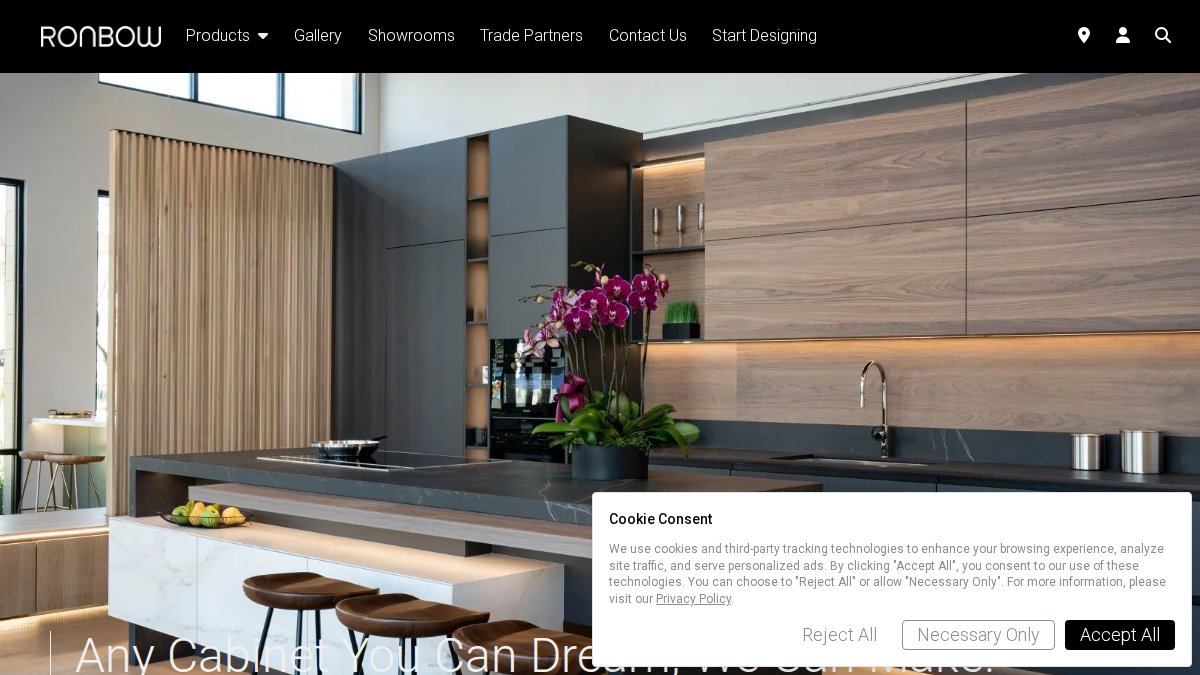
Ronbow appears in a guide to custom cabinet makers for luxury kitchen remodels and is described as a California-made choice.

Ask each maker for a written specification sheet, because “custom” means different things across shops: some customize dimensions only, while others customize joinery and finish. Confirm lead time and warranty handling in writing before committing, since custom orders are typically non-cancelable once production begins.

Screenshot of ronbow.com interface
Made To Order Custom Cabinets – Ronbow

Best for: Homeowners prioritizing bespoke sizing and finishes.
Skip if: Your timeline is short or your budget is fixed.

Key Takeaway
The right alternative depends on which problem you want solved. If you want one team accountable for the whole project, a full-service route fits. If you want to buy cabinets and can manage trades, an online assembled or RTA seller may fit. If brand and dealer support matter, brand-name cabinetry may fit. Compare total project cost, not cabinet price alone.

Custom Kitchen Cabinets vs. Factory-Direct and RTA Options

Custom kitchen cabinets are built to your room’s exact dimensions and finish specification, while factory-direct and RTA cabinets come in standard sizes you adapt the room to fit.

Contact Us For A No-Cost, No-Obligation Consultation →

RTA cabinets arrive flat-packed and cost less per box, but they demand assembly time and precise measuring. Factory-direct assembled cabinets split the difference.

The real difference comes down to who solves the problem. With stock cabinets, you solve it. With custom, the shop does.

Kitchen Remodel Cost: What Drives the Total Project Price

Most cabinet comparisons stop at the cabinet price. That is the wrong number. The number that matters is total project cost: cabinets plus delivery, installation, countertops, labor for plumbing and electrical changes, permits, and disposal.

Here is how the major cost drivers break down, and how to translate a cabinet quote into a realistic project budget.

The Six Cost Buckets in a Kitchen Project

  1. Cabinetry: boxes, doors, drawer fronts, fillers, panels, trim, and hardware. This is usually the largest single line in a mid-to-high-end budget.
  2. Countertops: material, templating, and fabrication. A low allowance here is a common hidden increase.
  3. Installation labor: cabinet setting, trim, and hardware installation. RTA shifts assembly labor to you or your contractor.
  4. Trade labor: plumbing and electrical relocation if the layout moves the sink, range, or outlets.
  5. Permits and disposal: permit fees and haul-away are frequently excluded from quotes.
  6. Contingency: a reserve for surprises behind walls, especially in older homes.

Translating Cabinet Price Into Total Project Cost

A practical method is to build the budget from the cabinet line outward rather than from a bottom-line quote inward.

  • Start with the cabinet specification and a per-linear-foot or per-box price.
  • Add fillers, panels, trim, and hardware, which are often quoted separately.
  • Add delivery and, for RTA, assembly time or labor.
Watch Out
Comparing cabinet prices alone misleads. A cheaper cabinet paired with a relocated gas line or new electrical circuits often costs more overall than a slightly more expensive cabinet that fits the existing layout.

Where the Routes Diverge

Full-service remodeling bundles design, sourcing, and installation into one contract. Online assembled and RTA sellers typically leave measuring, permitting, countertop templating, and installation to you or your contractor, costs that still appear in the project budget, just on different lines. Dealer-sold brand cabinetry generally involves a dealer supplying the cabinets; confirm installation terms in writing.

Regional and Timing Caveats

Labor rates vary by market, and lead times vary by product and season. A budget built on national averages should be adjusted with local quotes. For a detailed breakdown of where the money goes in a high-end project, read our luxury kitchen renovation cost breakdown guide.

Key Takeaway
Budget the project, not the cabinet. Build the total from six buckets, confirm what each quote includes and excludes, and keep a contingency reserve for what is behind the walls.

How to Compare Kitchen Remodeling Quotes Line by Line

Learning how to compare kitchen remodeling quotes means reading past the bottom line. Three line items reveal the truth: cabinet specification, allowance amounts, and change-order terms.

  • Cabinet spec: brand, box material, door style, finish, and drawer glide rating
  • Allowances: confirm what each allowance covers before signing
  • Change orders: ask for the hourly rate and markup before signing

A quote with no specification is not a quote. It is an estimate with room to grow. Our guide on hidden costs in kitchen contracts walks through the clauses to flag before you sign.

Kitchen Renovation Timeline: From Design to Final Walkthrough

Kitchen renovation timelines vary with scope, and custom cabinetry is often the longest lead item. Ask your remodeler for a written schedule with milestones before committing.

Stock and RTA cabinets can shorten the ordering phase but shift assembly labor to you. Custom projects typically run longer on the front end because drawings and finish approvals happen before anything is cut.

Book a No-Cost Consultation With Capitol Design

The hardest part of choosing among kitchen factory alternatives is not finding options. It is knowing which route fits your room, your timeline, and your tolerance for managing trades. That decision is where projects succeed or stall.

Capitol Design brings over 35 years of custom kitchen and bath experience, award-winning design work, and a national service reach to that decision. Browse the kitchen cabinet options we offer, then request a quote and get a clear plan before you commit.

Frequently Asked Questions

What are the best alternatives to Kitchen Factory?

The right kitchen factory alternatives fall into a few groups: full-service design-build firms like Capitol Design, and online or brand-name cabinet suppliers. Which one fits depends on whether you want cabinets only or a complete renovation handled end to end. Full-service firms manage design and installation in one contract, while cabinet-only suppliers sell the boxes and leave labor to you.

What is the difference between factory-direct cabinets and custom cabinets?

Factory-direct and ready-to-assemble cabinets come in standard sizes and finishes, ship flat or assembled, and cost less because nothing is built to your room. Custom kitchen cabinets are measured to the space, built to your chosen dimensions, wood, and finish, and typically include design support. Custom work costs more and takes longer, but it solves awkward layouts, odd corners, and non-standard ceiling heights that stock sizes cannot. Ask any supplier which dimensions are adjustable before you sign.

How do I compare kitchen remodeling quotes fairly?

Put every quote on the same page before comparing totals. Check that each one lists cabinet brand and line, countertop material and thickness, demolition and disposal, electrical and plumbing allowances, permit responsibility, and the payment schedule. Compare quotes line by line, since a lower bid may exclude items another quote includes. Ask each firm to state what is excluded in writing, and confirm who handles change orders and at what rate.

How long does a kitchen remodel usually take?

Timelines vary with scope, but most projects move through design and selections, ordering, demolition, rough-in, cabinet installation, countertop templating, and finishing. Custom cabinetry typically has the longest lead time, so it sets the schedule. Ask each firm for a written timeline with milestones and a stated policy for delays. A firm that gives you a single completion date without milestones is harder to hold accountable than one that maps each phase.

Are custom kitchen cabinets worth the extra cost?

Custom cabinets earn their cost when standard sizes leave gaps, when the layout is unusual, or when you plan to stay in the home long enough to enjoy the fit and finish. They also let you match cabinetry to the architecture rather than forcing filler panels into corners. If your kitchen is a simple rectangle and budget is the priority, quality semi-custom or ready-to-assemble lines can work well. Weigh the upgrade against how long you plan to own the home.


Get started with Capitol Design and turn your kitchen comparison into a finished room.

Contact Us For A No-Cost, No-Obligation Consultation

GoogleAdd capitoldesign.us as a preferred source on Google →

Filed Under: Blog Tagged With: best kitchen factory alternatives, custom kitchen cabinets, how to compare kitchen remodeling quotes, kitchen factory alternatives, kitchen remodel cost, kitchen renovation timeline

How to Hire Professional Kitchen Remodeling Contractors

October 30, 2026 by Capitol Design

Last Updated: October 30, 2026

Quick Summary

To hire professional kitchen remodeling contractors, start with a written scope, then screen every candidate with a checklist covering license, insurance, references, change-order process, and payment schedule. Compare bids line by line rather than by total price, and sign only a contract that states scope, price, schedule, payments, and change orders in writing.

  • Settle two questions first: whether you keep the current layout and your hard ceiling on spend.
  • Ask for three client references from projects finished in the last 18 months.
  • A backlog of four to eight weeks is normal for a reputable firm.
  • A bid that is $20,000 lower usually has $30,000 of work missing.
  • Include a contingency of 10% to 15% in your budget.

Table of Contents

  • Start With a Written Scope Before You Contact Anyone
  • Build a Kitchen Remodeling Contractor Checklist Before You Interview
  • Questions to Ask Kitchen Remodeling Contractors in the First Meeting
  • Verify Licenses, Insurance, References, and Complaints
    • What a License and Insurance Check Actually Confirms
    • How to Read References and Complaint Records
  • Kitchen Remodel Estimate Comparison: Line by Line, Not Bottom Line
    • Step 1: Normalize Every Bid to Your Written Scope
    • Step 2: Read the Allowances, Not the Totals
    • Step 3: Compare Exclusions and “By Others” Language
    • Step 4: Compare Payment Schedules and Change-Order Terms
    • Step 5: Flag the Bids That Fail the Red-Flag Test
  • Kitchen Remodeling Contract Terms That Protect You
    • Payment Schedules, Change Orders, and Dispute Clauses
  • Budget, Timeline, and Disruption Planning for a Professional Hire
  • Book Your No-Cost Design Consultation With Capitol Design
  • Frequently Asked Questions

Start With a Written Scope Before You Contact Anyone

Most homeowners start calling kitchen remodeling contractors before they know what they want. That is backwards, and it is the single biggest reason projects run over budget.

The numbers explain why this matters. According to Houzz Research’s 2026 kitchen study, 87% of homeowners renovating a kitchen hire at least one professional, with cabinetmakers and general contractors the most common hires.

At Capitol Design, we have seen how much a clear scope matters over more than 35 years of custom kitchen and bath work.

Before you write anything down, settle two questions: are you keeping the current kitchen layout, and what is your hard ceiling on spend? Layout changes move walls and plumbing, which drives cost. If you are unsure whether you need design help to define the scope, read Do I Need to Hire a Kitchen Designer? and Kitchen Renovations: Where to Start before you make any calls.

Build a Kitchen Remodeling Contractor Checklist Before You Interview

A kitchen remodeling contractor checklist is a short screening document you complete for every candidate, so you compare firms on the same criteria instead of on whoever sounded best on the phone.

Your checklist should capture:

  • License number and expiration date
  • General liability and workers’ compensation coverage amounts
  • Years in business and number of completed kitchens

The last four items separate serious firms from sales operations. A contractor who cannot produce a sample schedule has never run a project on one.

One insider note: professionally led kitchen projects are growing at 2.9% annually while DIY projects grow at just 0.6%, according to the Home Improvement Research Institute.

Questions to Ask Kitchen Remodeling Contractors in the First Meeting

The best questions to ask kitchen remodeling contractors force specifics: who will be on site daily, what happens when a wall hides a problem, and how change orders get priced.

Homeowner and kitchen remodeling contractors reviewing floor plans and cabinet samples at a kitchen island.

Ask every firm the same list, write down the answers verbatim, and rate each response as strong, acceptable, or weak.

  1. Who is my day-to-day contact, and will that person be on site? Strong: a named project manager or lead carpenter with a direct phone number and a stated site-visit cadence. Weak: “You’ll talk to whoever is running the crew.” The person who answers this is the person you will call when the countertop template is wrong.
  2. What is your process when demolition reveals water damage or outdated wiring? Strong: a written discovery protocol, stop work, photograph and document, issue a written change order with price and schedule impact before proceeding, plus a stated hourly or unit rate. Weak: “We just fix it and bill you.” Hidden conditions are the most common source of mid-project disputes.
  3. How do you price change orders, and what is the markup? Strong: a stated markup range on materials and a labor rate, plus a rule that no change order work begins without a signed written order. Weak: “We charge what it costs” or a refusal to name a number. A firm that will not put the markup in the contract will apply it later without your consent.
  4. Which parts of the work do you subcontract? Strong: a specific list, electrical, plumbing, HVAC, countertop fabrication, maybe drywall, with the note that subs are licensed and carry their own insurance. Weak: “We do everything in-house” when the firm cannot legally pull electrical or plumbing permits. You need to know who is in your home and who is responsible if their work fails.
  5. What is your current backlog, and when could you start? Strong: a specific start window tied to a signed contract date, plus an honest count of projects ahead of yours. Weak: “We can start Monday” from a firm with no backlog, that can signal a sales operation with no production capacity. A backlog of four to eight weeks is normal for a reputable firm.
  6. Can I visit an active job site? Strong: yes, with a scheduled time and a request that you not disrupt the crew. Weak: excuses about client privacy or safety. This is the sharpest filter in the list, look at how the crew protects finished surfaces, whether debris is contained, and whether the site looks organized.
  7. Who pulls the permits, and will you show me the permit before work starts? Strong: the contractor pulls the permit in the firm’s name and provides the permit number and inspection schedule. Weak: “You can pull it as the homeowner”, which shifts code compliance and liability onto you.
  8. What is your warranty, and what does it actually cover? Strong: a written warranty with a stated term for workmanship (commonly one to two years) separate from manufacturer warranties, plus a clear claim process. Weak: “We stand behind our work” with nothing in writing.
Pro Tip
Score each firm against the same eight questions so you compare the whole picture, not just price.

One insider note: professionally led kitchen projects are growing at 2.9% annually while DIY projects grow at just 0.6%, according to the Home Improvement Research Institute. Demand is rising, so vetting fast and thoroughly matters more than ever. The firms with real production capacity will answer these questions without hesitation; the ones selling rather than building will stall on the site visit and the change-order markup.

Verify Licenses, Insurance, References, and Complaints

Verification is where most homeowners get lazy, and it is where the money is lost. Check the license, confirm the insurance certificate directly with the carrier, call the references, and search your state’s licensing board and consumer protection office for complaint records.

What a License and Insurance Check Actually Confirms

A state contractor license confirms the firm met your state’s minimum requirements for that trade, not that the work will be good. Insurance confirms you are not personally liable if a worker is injured or your house is damaged.

Ask for a certificate of insurance naming you as certificate holder, then call the insurer to confirm the policy is active. Contractors who stall on this step are usually uninsured.

How to Read References and Complaint Records

References should come from projects finished in the last 18 months, and you should ask each one a specific question: did the final invoice match the contract? Homeowners who follow a structured vetting process report 73% higher satisfaction with their finished kitchen, according to Hanodecor’s 2026 remodeling guidance. That is the payoff for an hour of phone calls.

Kitchen Remodel Estimate Comparison: Line by Line, Not Bottom Line

Comparing kitchen remodel estimates by total price is the fastest way to hire the wrong contractor. Compare line by line: what is included, what is excluded, and what allowances are set for materials. A bid that is $20,000 lower usually has $30,000 of work missing.

Labor is a meaningful share of a kitchen budget, so the gap between bids often hides in materials, allowances, and exclusions.

Step 1: Normalize Every Bid to Your Written Scope

Before you compare a single number, put each bid next to your written scope and mark every line as included, excluded, or allowance. A bid that omits a scope item is not cheaper, it is incomplete, and the missing work will come back as a change order at the contractor’s markup. Build a comparison sheet with these columns:

Contact Us For A No-Cost, No-Obligation Consultation →

Line Item Bid A Bid B Bid C Notes
Demolition and haul-away Included Included Excluded Ask who removes debris and pays dumpster fees
Cabinet allowance $18,000 $12,000 $15,000 Confirm brand, door style, and box construction
Countertop material Quartz, 3cm Laminate Quartz, 2cm Thickness and edge profile change cost
Electrical and permits Included Excluded Included Permits must be named, not implied
Plumbing rough-in Included Allowance $2,500 Included Allowances hide real cost
Backsplash Included Excluded Allowance $1,200 Tile selection drives the number
Appliance installation Included Excluded Included Who connects gas and water?
Contingency line 10% 0% 5% Zero contingency is a red flag

Step 2: Read the Allowances, Not the Totals

An allowance is a placeholder number for a material you have not selected yet. A $12,000 cabinet allowance and an $18,000 cabinet allowance can describe the same kitchen if one assumes stock cabinets and the other semi-custom. Ask each contractor what brand, door style, and box construction the allowance assumes, and what happens if you exceed it, the overage is billed at the contractor’s markup, not at retail.

Step 3: Compare Exclusions and “By Others” Language

Scan every bid for “not included,” “by others,” and “owner to supply”, these lines turn into change orders. Common exclusions to check: permit fees, dumpster rental, final cleaning, painting, appliance delivery and hookup, backsplash tile, and any repair to drywall or flooring outside the kitchen footprint. A bid that excludes three items your scope requires is a partial bid, not a lower one.

Step 4: Compare Payment Schedules and Change-Order Terms

The total price is only half the comparison; the payment schedule tells you how much risk you carry. A safe structure ties payments to completed milestones, a modest deposit at signing, a payment at rough-in inspection, a payment at cabinet installation, and a final payment at punch-list completion, with retainage held until you sign off. A schedule that asks for half the money before demolition puts all the risk on you.

Step 5: Flag the Bids That Fail the Red-Flag Test

Walk away from any bid that shows these patterns, regardless of price:

  • A total far below the others with no explanation of what is missing, the missing work will return as change orders.
  • No contingency line or a contingency described as “unlimited”, both are unrealistic.
  • Vague scope language such as “standard electrical” or “typical plumbing” without a line-item description.
Watch Out
A bid is not a contract. The number on the bid page is a proposal; the contract is what governs the project. Before you sign, confirm the contract repeats the scope, the price, the payment schedule, the change-order markup, the permit responsibility, and the warranty terms. If the contract is thinner than the bid, ask why.

For a deeper look at spotting buried fees, read Are Hidden Costs Sneaking Into Your Kitchen Contract? before you sign anything. The bid comparison catches the gaps on paper; the contract review makes sure they stay closed.

Kitchen Remodeling Contract Terms That Protect You

A kitchen remodeling contract should state the scope, the price, the schedule, the payment schedule, and the change-order process in writing. If any of those five items is missing or vague, do not sign.

Payment Schedules, Change Orders, and Dispute Clauses

Never pay more than a small deposit up front, and tie every subsequent payment to completed milestones you can see. A contract that asks for half the money before demolition starts puts all the risk on you.

Change orders must be written and signed before the extra work begins, with the price stated. Ask what the markup is on changes now, not mid-project.

Budget, Timeline, and Disruption Planning for a Professional Hire

Realistic budgets include a contingency of 10% to 15%, and realistic timelines include the weeks when your kitchen is unusable. Plan for both before demolition day.

Return on investment varies sharply by project size. Minor kitchen remodels return 113% of costs nationally, while major upscale remodels return 36%, according to the 2026 Kitchen ROI & Cabinet Trends Report. For realistic cost ranges to set your budget, see The Luxury Kitchen Renovation Cost Breakdown Guide.

Plan disruption in three phases: demolition and rough-in, when the kitchen is fully offline; installation, when cabinets and countertops go in; and punch list, when the small fixes happen. Set up a temporary kitchen elsewhere in the house, and expect the offline phase to run several weeks. Sequencing cabinet installation, countertop templating, and appliance delivery is where schedules slip, so ask your contractor to show the order in writing.

Book Your No-Cost Design Consultation With Capitol Design

Hiring well comes down to one habit: verify before you sign. A written scope, a screening checklist, a line-by-line bid comparison, and a contract with milestone payments will filter out most of the risk in a kitchen project.

Capitol Design brings over 35 years of custom kitchen and bath design experience to that process, led by principal Joe Currie.

Get started with Capitol Design and book your no-cost design consultation to turn your scope into a plan.

Frequently Asked Questions

How do I find a reputable kitchen remodeling contractor?

Start with a written scope, then shortlist three firms whose recent work matches your project type and budget. Verify each license and insurance certificate directly with the issuing authority, and ask for references from projects finished in the past 12 months. Price alone is a weak filter; scope, references, and contract clarity decide the outcome.

How many estimates should I get for a kitchen remodel?

Three written estimates is the practical number. Fewer than three gives you no benchmark for labor and material costs, while more than four usually delays the project without adding information. Ask each kitchen remodeling contractor to bid the same written scope so the numbers are comparable. Expect labor to be a significant part of the total project budget, and treat any bid far below the others as a signal to check what was excluded rather than a bargain.

What are red flags when hiring a remodeling contractor?

Watch for large cash deposits before work starts, a contract missing a payment schedule or change-order clause, no verifiable license number, and reluctance to let you speak with past clients. Vague scopes that list allowances instead of specified products also cause trouble later. A contractor who cannot explain who pulls the permits or who supervises subcontractors is a risk on any project. Ask for the certificate of insurance naming you as additional insured, and confirm it with the insurer before signing.

What should be included in a kitchen remodeling contract?

A solid contract names the full scope, product specifications with model numbers, a payment schedule tied to milestones, a start and completion date, change-order procedures with pricing rules, warranty terms, and a dispute resolution clause. It should also state who pulls permits and who carries liability and workers’ compensation insurance. The contract is where you protect a large investment. Read every line before signing.


The hardest part of a kitchen project is not picking cabinets. It is trusting the firm you hire. Capitol Design handles design, planning, and installation as one start-to-finish project, with award-winning design work and a portfolio built over 35 years. Get started with Capitol Design and book a no-cost, no-obligation consultation to see what your kitchen can become.

Contact Us For A No-Cost, No-Obligation Consultation

GoogleAdd capitoldesign.us as a preferred source on Google →

Filed Under: Blog Tagged With: hiring professional kitchen remodeling contractors, kitchen remodeling contractor checklist, kitchen remodeling contractors, questions to ask kitchen remodeling contractors

Are Custom Bathroom Design Services Worth the Cost?

October 28, 2026 by Capitol Design

Last Updated: October 28, 2026

Quick Summary

Custom bathroom design services pricing is the fee paid to a designer to plan a bathroom before construction begins, billed separately from labor and materials. Angi’s data puts professional design services at $3,000-$12,000 depending on scope, bathroom size, and finish selections, while Homewyse’s 2026 estimate puts basic bathroom design at $2,304-$2,793 per design.

  • Bathroom design fees are billed hourly, as a flat fee, or as a percentage of project cost.
  • Independent designers charge $45-$250 per hour, with most landing around $125-$150.
  • The 2025 Project Decision Study reported average bathroom-remodel spending of $12,061 and median spending of $7,800.
  • A line-item remodel budget lists design services at $2,500-$6,000, excluding engineering and permit filing.
  • Evaluate a proposal by checking whether drawings are dimensioned and who pulls permits.

Table of Contents

  • Custom Bathroom Design Services Pricing: The Verdict
  • Bathroom Design Fees: Hourly, Flat, and Percentage Models
  • What Is Included in Bathroom Design Services?
  • Bathroom Remodel Cost Breakdown: Where the Money Goes
  • How Provider Types Compare: Design-Only vs. Design-Build
  • How to Evaluate a Custom Bathroom Design Proposal
  • Book Your No-Cost Custom Bathroom Design Consultation
  • Frequently Asked Questions

Custom Bathroom Design Services Pricing: The Verdict

Custom bathroom design services pricing is the fee a homeowner pays a designer to plan a bathroom before construction begins, and it is billed separately from the labor and materials that follow. Here is the short answer: design fees are real, but they are not the number that decides your project.

According to Angi’s bathroom design cost data, professional design services run $3,000-$12,000 depending on scope, bathroom size, and finish selections. Homewyse’s 2026 estimate puts basic bathroom design at $2,304-$2,793 per design. Neither figure is a remodel. Both are the planning layer.

The table below is the fastest way to see how the fee models stack up.

Fee Model Typical Basis Best For Main Risk
Hourly $45-$250 per hour Small, well-defined scopes Open-ended cost if decisions drag
Flat fee Fixed per-design price Homeowners who want certainty Padded to cover scope creep
Percentage of project A share of construction cost Full-service, design-build work Fee rises as the budget rises

Bathroom Design Fees: Hourly, Flat, and Percentage Models

Bathroom design fees are billed three ways, and the model matters more than the rate. Houzz’s designer rate guidance reports independent designers charging $45-$250 per hour, with most landing around $125-$150. That spread is enormous, and it exists because “hourly” can mean a two-hour color consult or a forty-hour full drawing set.

What Is Included in Bathroom Design Services?

What is included in bathroom design services varies by provider.

How Much Does a Bathroom Remodel REALLY Cost?

Built By Becker

Bathroom Remodel Cost Breakdown: Where the Money Goes

A bathroom remodel cost breakdown separates design from construction, and construction is where the budget actually lives. The Home Improvement Research Institute’s 2025 Project Decision Study reported average bathroom-remodel spending of $12,061 and median spending of $7,800. Those are build numbers, not design fees. The problem with most published breakdowns is that they stop at broad totals. A homeowner comparing design proposals needs a line-item view that shows where the design fee sits relative to materials, labor, permits, and contingency.

Line Item Planning Range Notes
Design services $2,500-$6,000 Drawings, finish schedule, lighting plan; excludes engineering and permit filing
Demolition and disposal $800-$1,500 Haul-away and dumpster included
Rough plumbing $1,200-$2,500 Fixture swaps in existing locations price at the low end
Electrical and lighting $900-$2,000 GFCI protection, exhaust fan, vanity and recessed lighting
Waterproofing and tile backer $700-$1,400 Cement board or bonded waterproof membrane
Tile labor and setting materials $2,000-$4,500 Floor and tub/shower surround; large-format tile prices higher
Tile and stone materials $1,500-$4,000 Porcelain at the low end, natural stone and mosaics higher
Vanity and countertop $1,200-$3,500 Stock vanity versus custom cabinetry is the main swing
Plumbing fixtures $800-$2,500 Faucet, shower trim, toilet, drain assemblies
Paint, trim, and accessories $500-$1,200 Includes mirror, hardware, and towel bars
Permits $150-$500 Varies by jurisdiction and scope
Contingency (10-15%) 10-15% of hard costs Reserve for concealed conditions

For a fuller picture of how these line items add up before you judge a design fee, see our guide to understanding bathroom remodeling costs.

How Provider Types Compare: Design-Only vs. Design-Build

Provider Type Typical Pricing Model Core Deliverables Construction Role Main Trade-off
Independent designer Hourly ($45-$250/hr) or flat fee Measured drawings, layout, finish schedule, lighting plan None; you bid the work separately Lowest design cost on paper, but no single party accountable for buildability
Design-build firm Bundled design fee plus construction contract, or percentage of project Full drawing set, specifications, permit coordination, construction administration Owns construction under one contract Higher upfront cost, but one accountable team from layout to punch list
General contractor with in-house design Design fee rolled into the construction bid Layout and selections coordinated with the build Owns construction Pricing is opaque because design and build are not separated
Showroom consultation Free or low flat fee, often credited against purchases Product selections, basic layout guidance None Cheap entry point, but selections may be limited to showroom lines and no construction oversight

Our principal, Joe Currie, leads Capitol Design, which has over 35 years of industry experience and award-winning design projects featured in local and national magazines. If you are weighing the two models, our article on the benefits of full service design firms for homeowners lays out the case in detail.

Contact Us For A No-Cost, No-Obligation Consultation →

How to Evaluate a Custom Bathroom Design Proposal

Evaluating a custom bathroom design proposal comes down to one question: does the document let a contractor price the job without guessing? If it does not, the fee is buying you a mood board, not a plan. Precision in these technical specifications prevents the common budget creep that often inflates bathroom renovation costs when builders encounter unforeseen structural obstacles.

Designer and homeowner reviewing a custom bathroom design proposal with floor plans and tile samples

Use this checklist before you sign:

  • Does the scope list every room, fixture, and finish by name?
  • Are drawings dimensioned, or just rendered?
  • Who pulls permits, and is that in the fee?
  • What is the revision allowance, and what does an extra round cost?
  • How are change orders priced once construction starts?
  • Can you speak with a past client whose project matched yours?
  • Is the fee hourly, flat, or a percentage, and what triggers a re-quote?

If you want help vetting designers before you commit, our guide on how to hire a luxury residential interior designer walks through the questions that separate a real proposal from a sales pitch.

Book Your No-Cost Custom Bathroom Design Consultation

The design fee question has a practical answer: get a real scope and a real number before you decide anything. Capitol Design offers a no-cost, no-obligation consultation.

You get customized solutions for discerning clients, high-quality kitchen and bathroom installations, and expert design work focused on aesthetic beauty and functional excellence. If resale return is on your mind, our luxury bathroom remodeling ROI analysis shows what the investment tends to return.

Ready to see what your bathroom could become? Visit our bathroom design remodeling and renovations page to book your no-cost custom bathroom design consultation with Capitol Design.

Frequently Asked Questions

How much do custom bathroom design services cost?

Pricing depends on the project. Visit Capitol Design’s website for current pricing or a quote.

What is included in a bathroom design fee?

The specific deliverables included in a design fee depend on the provider. Ask for the scope in writing.

Do bathroom designers charge a flat fee or an hourly rate?

Ask the provider to explain its pricing structure and what the quoted fee covers.

Is hiring a bathroom designer worth the cost?

Whether hiring a designer is worthwhile depends on your project and priorities. Capitol Design offers a no-cost, no-obligation consultation.

Is bathroom design included in a remodeling quote?

Whether design is included depends on the provider and the scope of the quote. Confirm what the quote covers before signing.

Contact Us For A No-Cost, No-Obligation Consultation

GoogleAdd capitoldesign.us as a preferred source on Google →

Filed Under: Blog Tagged With: bathroom design fees, bathroom remodel cost breakdown, custom bathroom design, custom bathroom design services pricing, what is included in bathroom design services

The Luxury Kitchen Renovation Cost Breakdown Guide

October 25, 2026 by Capitol Design

Last Updated: October 26, 2026

Quick Summary

A luxury kitchen renovation typically costs $85,000 to $200,000 for pull-and-replace projects, while full custom builds with structural work reach $175,000 to $250,000 or more. The breakdown covers design fees, permits, custom cabinetry, stone countertops, appliances, labor, and a 10%-20% contingency.

  • Luxury kitchen remodels run an estimated $400 to $800 per square foot, per Block Renovation’s 2026 guide.
  • Custom cabinetry is usually the largest single line, running $35,000 to $80,000 for a 250-square-foot kitchen.
  • Kitchen remodel labor cost typically runs 30% to 50% of total project cost at the luxury tier.
  • Carry 10% to 15% contingency for a well-scoped project, or 20% when the home is older.
  • Ask contractors to show design, permits, project management, and contingency as separate lines.

Table of Contents

  • What a Luxury Kitchen Renovation Cost Breakdown Actually Looks Like
  • High-End Kitchen Remodel Cost by Scope and Size
    • Pull-and-Replace vs. Full Custom Build
    • Cost per Square Foot at the Luxury Tier
  • Line-Item Cost Breakdown: Where the Money Goes
    • Sample Luxury Line-Item Budget (250 Sq. Ft., Full Custom)
    • Luxury Material and Appliance Tiers
    • Soft Costs: Design Fees, Permits, and Project Management
    • Appliances, Countertops, and Flooring Ranges
  • Custom Kitchen Cabinets Cost and Why It Swings So Widely
    • Cabinetry Cost by Construction Tier
    • Four Variables That Drive the Swing
    • How to Compare Cabinet Quotes
  • Kitchen Remodel Labor Cost and the Trades Behind It
  • Building a Kitchen Renovation Budget That Survives Construction
    • Contingency Planning for Hidden Conditions
  • Comparing Contractor Proposals and What to Ask Before You Sign
  • Book a No-Cost Consultation to Price Your Kitchen
  • Frequently Asked Questions

What a Luxury Kitchen Renovation Cost Breakdown Actually Looks Like

A luxury kitchen renovation cost breakdown is an itemized accounting of every dollar in a high-end kitchen project, from demolition and permits through custom cabinetry, stone, appliances, and labor.

The gap is wide. Block Renovation’s 2026 budget guide estimates a high-end kitchen renovation at $85,000 to $200,000, with pull-and-replace projects landing at $85,000 to $125,000.

Those ranges are real, and they are also nearly useless on their own.

High-End Kitchen Remodel Cost by Scope and Size

Scope drives cost more than square footage does. A 200-square-foot kitchen that keeps its plumbing and electrical layout costs far less than a 150-square-foot kitchen that moves a sink wall and adds a range hood duct run.

Pull-and-Replace vs. Full Custom Build

Pull-and-replace is the entry point to the luxury tier: new cabinets, counters, appliances, and finishes in the existing footprint, with plumbing and electrical staying roughly where they are. Block Renovation puts these projects at $85,000 to $125,000.

A full custom build changes the room itself. Walls move, structural work enters the budget, and every trade reopens. That is where the $200,000-plus figures come from, and where a detailed luxury kitchen renovation cost breakdown earns its keep.

Cost per Square Foot at the Luxury Tier

Luxury kitchen remodels run an estimated $400 to $800 per square foot, according to Block Renovation’s 2026 guide (High End Kitchen Renovation Cost: 2026 Budget Guide). A 250-square-foot kitchen at that rate lands between $100,000 and $200,000 before soft costs.

Use per-square-foot math as a sanity check, not a budget. It tells you whether a proposal is in the right neighborhood. It cannot tell you whether the number is honest.

Scope Level Typical Range What Changes
Pull-and-replace $85,000-$125,000 Finishes and fixtures only
Full custom, same footprint $125,000-$175,000 Layout refined, systems upgraded
Full custom with structural work $175,000-$250,000+ Walls moved, trades reopened

Line-Item Cost Breakdown: Where the Money Goes

Most luxury kitchen guides stop at broad ranges. A real luxury kitchen renovation cost breakdown turns those ranges into line items with sample totals, so you can see how a $160,000 kitchen and a $95,000 kitchen diverge before demolition.

A designer and homeowner reviewing a printed budget spreadsheet on a marble kitchen island, with stone samples, cabinet finish swatches, and appliance spec sheets spread out beside them

Sample Luxury Line-Item Budget (250 Sq. Ft., Full Custom)

Line Item Low High Notes
Design fees $8,000 $25,000 5%-15% of construction; full-service firms at the top
Permits and inspections $1,000 $5,000 Varies by jurisdiction; structural and electrical add fees
Demolition and disposal $3,000 $8,000 Includes dumpsters, hauling, and protection
Custom cabinetry $35,000 $80,000 Largest single line; see cabinetry section
Countertops (natural stone) $10,000 $40,000 Slab-dependent; fabrication and install included
Appliances $20,000 $50,000+ Professional-grade package at the top
Flooring $3,750 $10,000 $15-$40 per sq. ft. installed
Plumbing (fixtures and rough-in) $4,000 $12,000 Sink, faucet, pot filler, relocation
Electrical and lighting $5,000 $15,000 Recessed, pendants, under-cabinet, panel upgrades
Backsplash and tile $3,000 $10,000 Full-height stone at the top
Painting and finish carpentry $4,000 $10,000 Trim, crown, touch-ups
Project management $6,000 $18,000 Often folded into design fee; ask for it separately
Contingency (10%-20%) $10,000 $30,000 See contingency section
Sample total $112,750 $313,000 Midpoint near $200,000

That table is the answer to “where does the money go.” The ranges are wide because luxury is a tier, not a price. The sample total also shows why a single headline number misleads: the same footprint can land at $115,000 or $310,000 depending on selections.

Luxury Material and Appliance Tiers

The premium is driven by tier choices inside each line. Here is how the tiers compare at current U.S. pricing:

  • Custom cabinetry. Semi-custom boxes with custom fronts run $25,000-$45,000 for a 250-square-foot kitchen; full custom millwork $45,000-$80,000; inset construction with hand-finishing at the top of that range. The jump from semi-custom to full custom is typically $20,000-$35,000.
  • Natural stone countertops. Quartz and granite start around $60-$100 per square foot installed; marble and quartzite $100-$200; rare slabs and book-matched installations exceed $200. A single dramatic island slab can add $5,000-$15,000 over a standard selection.
  • Professional-grade appliances. A mid-tier package (range, refrigerator, dishwasher, hood) runs $20,000-$30,000; a full professional package with a 48-inch range, column refrigerator, and beverage drawers runs $40,000-$60,000+. Built-in refrigeration alone can consume $10,000-$20,000.

Soft Costs: Design Fees, Permits, and Project Management

Soft costs are the most overlooked part of a luxury kitchen renovation cost breakdown, and they are where proposals become hard to compare.

  • Design fees. Full-service design typically runs 5%-15% of construction cost, or $8,000-$25,000 on a $160,000 project. Some firms charge hourly or per square foot; ask which model applies.
  • Permits. Block Renovation estimates $1,000-$5,000 in most areas. Structural work, electrical panel upgrades, and gas line changes each add fees and inspection cycles.
  • Project management. General contractor overhead and profit usually runs 15%-25% of construction cost and is often embedded in line items rather than shown separately. Ask for it as a visible line so you can audit the proposal.
Pro Tip
Ask every contractor to show design, permits, project management, and contingency as separate lines. A proposal that folds them into “miscellaneous” cannot be compared against another bid.

Appliances, Countertops, and Flooring Ranges

For quick reference, the headline component ranges most U.S. guides cite remain useful as a sanity check: appliances $20,000-$50,000+, countertops $10,000-$40,000, and flooring $15-$40 per square foot installed. Our guides to kitchen appliance options, countertop materials, and kitchen flooring options cover the trade-offs inside each range.

Use the sample budget above as the template. Replace each range with your actual selections, and the total becomes a number you can defend, not a range you hope holds.

Custom Kitchen Cabinets Cost and Why It Swings So Widely

Custom kitchen cabinets cost is the line item homeowners most often underestimate, and it is the one where the word “custom” does the most work. For a 250-square-foot luxury kitchen, cabinetry typically runs $35,000-$80,000, often the largest single line in the budget, and the gap between tiers is measured in tens of thousands.

How Much Does a High End Kitchen Remodel Cost & Kitchen Remodel Cost Saving Tips

Elisa Covington | Transform Real Estate

Cabinetry Cost by Construction Tier

Tier Typical Range (250 sq. ft.) What You Get
Semi-custom boxes with custom fronts $25,000-$45,000 Standard box sizes, custom door styles and finishes
Full custom millwork $45,000-$80,000 Made-to-dimension boxes, integrated appliances, custom storage
Inset construction with hand-finishing $70,000-$100,000+ Doors flush within the frame, hand-glazed or specialty finishes

The jump from semi-custom to full custom is typically $20,000-$35,000. The jump to inset construction adds another $15,000-$25,000, largely because every door and drawer must be hand-fitted to its opening.

Four Variables That Drive the Swing

  1. Construction method. Frameless, face-frame, and inset doors require different labor hours per box. Inset is the most labor-intensive because each door is fitted individually.
  2. Finish. Factory-applied stains are the baseline. Painted finishes with hand-glazing, brushed, or distressed details add $5,000-$15,000 on a full kitchen because they require additional prep and hand work.
  3. Storage internals. Pull-outs, organizers, appliance panels, and custom inserts add cost per cabinet, not per project. A fully outfitted kitchen can add $8,000-$20,000 over a standard interior.
  4. Site conditions. Out-of-plumb walls mean filler panels and scribing, and that is skilled labor. Older homes often add $2,000-$6,000 in field adjustments.

How to Compare Cabinet Quotes

Cabinet quotes are not comparable by total. Two bids $20,000 apart may differ by $40,000 in scope. Run every quote through these questions:

Contact Us For A No-Cost, No-Obligation Consultation →

  • Is the box construction (frameless, face-frame, inset) stated explicitly?
  • Are interiors and hardware included, or priced as upgrades?
  • Is installation separate from delivery?
Watch Out
Cabinetry is the line most affected by change orders. Decide construction method, finish, and storage before you sign. A change from painted to inset after fabrication can add 30%-50% to the cabinet line and extend lead time by weeks.

Here is where a luxury kitchen renovation cost breakdown gets honest: cabinetry is usually the largest single line in the budget, and it is the one where a detailed, tiered quote, not a bottom-line number, protects you.

Kitchen Remodel Labor Cost and the Trades Behind It

Kitchen remodel labor cost typically runs 30% to 50% of total project cost at the luxury tier, spread across demolition, carpentry, plumbing, electrical, tile, stone fabrication, painting, and finish carpentry.

Labor is also where regional variation shows up hardest. Urban markets with tight trade availability price higher than markets with more competition, and the difference is not small.

Two labor realities catch homeowners off guard. First, structural work requires engineering and inspection, which adds both cost and calendar time. Second, every trade sequence depends on the one before it.

Building a Kitchen Renovation Budget That Survives Construction

A kitchen renovation budget survives construction when it carries a real contingency and a locked scope. Ten to fifteen percent is the working range for a well-scoped luxury project. Twenty percent is realistic when the home is older or the walls are unknown.

Contingency Planning for Hidden Conditions

Hidden conditions are the costs nobody can see until demolition. Water damage behind a sink wall, outdated wiring that fails inspection, a floor that will not support stone, and ductwork that has to be rerouted all live in this category.

Treat contingency as a line item, not a cushion. If it goes unspent, you have budget for a finish upgrade at the end.

Comparing Contractor Proposals and What to Ask Before You Sign

Proposals are not comparable by bottom line. Two bids $30,000 apart may differ by $60,000 in scope, and the lower one is not always the cheaper project.

Run every proposal through the same questions:

  • Is demolition and disposal listed as a separate line?
  • Are permits included, and who pulls them?
  • Is the appliance allowance a fixed number or a range?

A common mistake is comparing allowances instead of selections. Before you sign anything, read our breakdown of hidden costs in kitchen contracts so you know what to look for in the fine print.

Book a No-Cost Consultation to Price Your Kitchen

The hardest part of a luxury kitchen project is not choosing the stone. It is trusting the number you were quoted.

Capitol Design has spent over 35 years designing and building custom kitchens for clients who have been burned before and want the budget to hold.

Get started with Capitol Design and price your kitchen against a real line-item budget, not a range.

Frequently Asked Questions

What is a realistic budget for a luxury kitchen renovation?

Published estimates put a high-end kitchen renovation at roughly $85,000 to $200,000, with pull-and-replace projects landing at the lower end around $85,000 to $125,000. HomeGuide estimates a broader high-end range of $70,000 to $250,000 or more, with a typical spend near $160,000 for design, materials, and labor. Luxury remodels priced per square foot run about $400 to $800. Your actual number depends on kitchen size, layout changes, and how far up the material tiers you go.

What is the most expensive part of a luxury kitchen remodel?

Appliances and cabinetry usually compete for the top line. Appliance packages in a luxury kitchen are estimated at $20,000 to $50,000 or more, and custom cabinetry carries similar weight once you factor in millwork, finishes, and hardware. Countertops come next at an estimated $10,000 to $40,000. Labor and trade work across plumbing, electrical, and installation adds another large share, which is why a full line-item breakdown matters more than a single headline number.

How much do custom kitchen cabinets cost in a high-end project?

Custom kitchen cabinets cost varies with door style, wood species, finish, interior fittings, and whether the layout is fully bespoke. In a luxury renovation, cabinetry is typically one of the two largest line items alongside appliances, and it is where specification choices create the widest spread. Ask for the cabinet line item broken out by room run, finish, and hardware so you can see what each upgrade adds before committing.

What percentage of a kitchen renovation budget should go to labor?

Labor and trade work commonly absorbs a substantial share of a kitchen renovation budget, and in luxury projects it rises further because of complex millwork, lighting plans, and structural changes. Rather than fixating on a single percentage, build your kitchen renovation budget around line items: demolition, rough-in plumbing and electrical, installation, and finish carpentry. A detailed proposal separates labor from materials so you can see exactly what you are paying for.

How much extra should I set aside for unexpected renovation costs?

A contingency of 10 to 20 percent of the project total is standard practice, and luxury renovations with layout changes or older homes should sit at the higher end. Hidden conditions drive most overruns: outdated wiring, undersized plumbing, water damage, or structural issues behind finished walls. Setting contingency aside before construction starts keeps a surprise from forcing a downgrade in finishes halfway through the project.

How can I reduce luxury kitchen renovation costs without compromising quality?

Spend where you touch and see it daily, and save where you do not. Keep the existing layout to avoid moving plumbing and gas lines, choose a statement stone on the island and a quieter surface on the perimeter, and put the budget into cabinetry and appliances that hold up over decades. Permits alone are estimated at $1,000 to $5,000, so avoiding unnecessary structural work protects the budget without touching finish quality.


If you are planning a high-end renovation and want a cost breakdown you can actually build from, book a no-cost consultation with our team. We will walk your space, scope the work, and show you where the money goes before you commit to anything.

Contact Us For A No-Cost, No-Obligation Consultation

GoogleAdd capitoldesign.us as a preferred source on Google →

Filed Under: Blog Tagged With: custom kitchen cabinets cost, high-end kitchen remodel cost, kitchen remodel labor cost, kitchen renovation budget, luxury kitchen renovation, luxury kitchen renovation cost breakdown

  • « Go to Previous Page
  • Page 1
  • Page 2
  • Page 3
  • Page 4
  • Interim pages omitted …
  • Page 13
  • Go to Next Page »
  • HOUZZcapitol-design-houzz
  • FACEBOOKcapitol-design-facebook
  • TWITTERcapitol-design-twitter
  • GOOGLEcapitol-design-google
Copyright © 2026 Capitol Design | 512-464-1155

Website Design by KEX Consulting