Last Updated: November 14, 2026
Quick Summary
Choosing high quality bathroom materials starts with mapping the room by exposure before you shop, separating wet, splash, dry, and floor zones. The best bathroom materials resist moisture, hold up to daily use, stay safe underfoot, and do not compromise indoor air quality, with style coming fifth.
- Tile and grout are not waterproof; a waterproof membrane behind them does the real work.
- Porcelain tile wins most bathroom flooring comparisons with near-zero water absorption and slip-resistant finishes.
- Quartz resists water and staining and never needs sealing, but a hot tool can scorch the resin.
- Reseal cement-based grout in a shower every one to two years to limit mildew and soap scum.
- Confirm waterproofing, slip ratings, and low-VOC products in writing before ordering any tile.
Table of Contents
- Start With a Zone-by-Zone Material Plan
- Selection Criteria for High Quality Bathroom Materials
- Bathroom Flooring Materials Comparison
- Bathroom Countertop Materials That Hold Up
- Acrylic Shower Walls vs. Tile and Stone
- Your Bathroom Remodel Checklist PDF: What to Confirm Before Ordering
- Book a No-Cost Material Consultation With Capitol Design
- Frequently Asked Questions
Start With a Zone-by-Zone Material Plan
Choosing high quality bathroom materials starts with one decision most homeowners skip: mapping the room by exposure before shopping.
Planning every renovation this way helps prevent the most expensive mistake in the category: finishes that cannot survive their location.
Here is the plan we use:
- Wet zone (inside the shower): full waterproofing, tile or solid-surface walls, slip-resistant floor
- Splash zone (around sinks and tub deck): sealed stone, quartz, or solid surface
- Dry zone (walls, ceiling, storage): moisture-resistant drywall, semi-gloss paint, sealed wood
Write this plan down before you look at a single sample. If you want the broader remodeling considerations that shape it, our guide to the key considerations when bathroom remodeling covers layout, ventilation, and sequencing in more detail.
Selection Criteria for High Quality Bathroom Materials
The best bathroom materials meet four tests at once: they resist moisture, hold up to daily use, stay safe underfoot, and do not compromise the air you breathe. Style comes fifth, which is why so many renovations look dated in five years while the cheap shower behind the wall quietly rots.
Moisture Resistance and Waterproofing
Moisture resistance is the ability of a material to repel or tolerate water without swelling, warping, or growing mold. Waterproofing is the system behind the surface that stops water from reaching the structure at all.
The distinction matters. Tile and grout are not waterproof; they are water-resistant surfaces sitting on a waterproof membrane, and the membrane does the real work.
Durability, Slip Resistance, and Indoor Air Quality
Durability in a bathroom means resistance to three things: standing water, cleaning chemicals, and thermal shock from hot showers. Slip resistance is measured by a coefficient of friction, and wet bathroom floors are where that number stops being abstract. Matte and textured finishes outperform polished ones underfoot, every time.
Indoor air quality is the criterion most guides ignore. Adhesives, sealants, grouts, and composite cabinet panels can release volatile organic compounds for months after installation. For a full look at the material options available to you, our materials options for your bathroom renovation page lays out the catalog.
Bathroom Flooring Materials Comparison
Porcelain tile wins the bathroom flooring comparison for most renovations because it combines near-zero water absorption with real slip-resistant finishes. Natural stone wins on character but demands sealing. Resilient options win on warmth and budget. Here is how they stack up.
| Material | Water Tolerance | Maintenance | Best For | Watch Out For |
|---|---|---|---|---|
| Porcelain tile | Excellent | Low | Most bathrooms | Slick when polished |
| Ceramic tile | Good | Low | Walls, light-traffic floors | Softer glaze wears |
| Natural stone | Good when sealed | High | High-end looks | Etches, stains, needs resealing |
| Luxury vinyl | Excellent | Very low | Budget, warmth underfoot | Can look flat up close |
| Engineered wood | Poor | Moderate | Dry zones only | Swelling at seams |
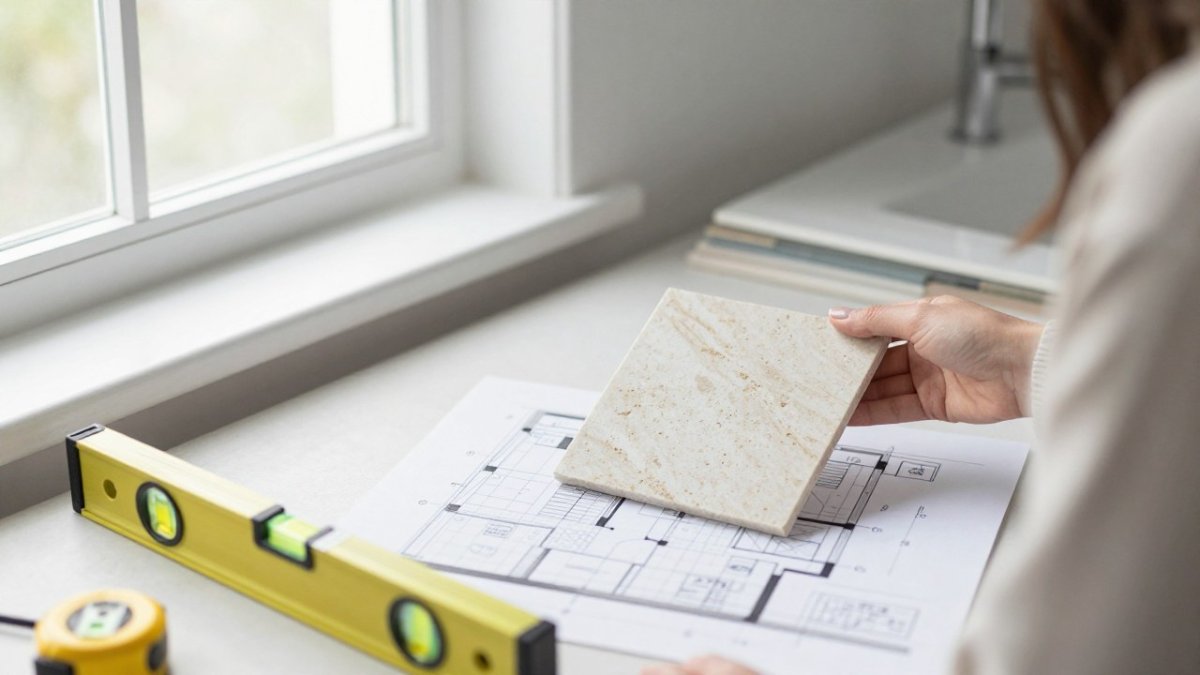
Tile, Stone, and Resilient Options Side by Side
Porcelain and ceramic tile are the default for good reason: they shrug off water, clean easily, and last decades.
Natural stone, including marble, brings depth no manufactured surface matches, but it etches from acidic cleaners and needs periodic sealing.
Resilient flooring, meaning luxury vinyl and similar products, offers warmth underfoot and forgiving installation. Where it falls short is authenticity: up close, the texture reads as printed rather than quarried.
Bathroom Countertop Materials That Hold Up
Quartz is a practical bathroom countertop material for many homes: it resists water and staining, never needs sealing, and holds a crisp edge. Granite and marble deliver more visual drama but demand more attention. Solid surface sits in the middle, with seams that can be sanded nearly invisible.
- Quartz: non-porous, stain resistant, no sealing, consistent pattern. Engineered stone is roughly 90-95% ground quartz mixed with polymer resin, which is why it shrugs off water and most household chemicals. It is not heat-proof, a hot curling iron or pan can scorch the resin permanently. Use a trivet.
- Granite: natural variation, needs sealing, tolerates heat well. A penetrating sealer every one to two years keeps it stain resistant; without it, oils and hard-water minerals settle into the pores. Granite is the most heat-tolerant common vanity top.
- Marble: elegant veining, etches easily, best in low-traffic baths. Marble is calcium-based, so acidic cleaners, toothpaste, perfume, and some cosmetics etch the surface. It can be honed and refinished, but that is a professional job.
Fabrication and Installation Details That Decide Longevity
The countertop is only as good as the cutout and the seal around it.
Edge profile matters for more than looks. A square eased edge is durable and easy to clean; a heavily profiled ogee or bullnose edge creates a lip where water sits and is harder to wipe.
A countertop templated before the vanity cabinet is set and leveled may not sit flat, and the resulting gap at the backsplash can let water get behind the top.
Lifecycle Cost and Repairability
Purchase price is the wrong number to compare. The real cost of ownership includes sealing (granite and marble), periodic refinishing (marble), and replacement if the surface cannot be repaired.
A practical way to compare: ask what the surface needs in year one, year five, and year ten. A countertop that needs resealing twice a decade is still a good value; one that needs replacement because a seam failed is not.
Matching the Countertop to the Zone
A vanity top in a primary bath sees water, cosmetics, and heat tools. A powder room top sees almost none of that, which is why marble and wood are more defensible there. A laundry-room or secondary-bath top sees chemicals and hard water. Match the material to the exposure, not to the photo. For whole-room redesign guidance, see our bathroom redesign and modernization service overview.
Acrylic Shower Walls vs. Tile and Stone
Acrylic shower walls beat tile on maintenance and beat stone on price, but they lose on longevity and resale impression. Acrylic is a molded plastic panel system with no grout lines, so it wipes clean in minutes and never grows mildew in a joint. Because the same trade-offs between upkeep, durability, and lasting impression apply underfoot, Bargain Factory Tile Outlet can help frame the choice of bathroom floor tile as part of the room’s long-term plan.
| Factor | Acrylic Walls | Tile | Stone |
|---|---|---|---|
| Grout lines | None | Yes | Yes |
| Cleaning effort | Very low | Moderate | Moderate to high |
| Lifespan | Shorter | Long | Longest |
| Sealing needed | No | Grout sealer | Yes, regularly |
| Resale impression | Basic | Strong | Premium |
| Substrate | Direct to studs or backer | Cement backer board or foam board | Cement backer board or foam board |
| Repairability | Panel replacement | Tile replacement, grout repair | Tile replacement, professional refinish |
What Sits Behind the Surface
Acrylic panels are typically glued to the studs or a backer and sealed at the seams and edges with silicone. The weak points are the seams, the corners, and the joint where the panel meets the shower pan.
Tile and stone are not waterproof either. They are water-resistant surfaces over a waterproof membrane, a sheet membrane or a liquid-applied coating, that ties into the drain and the curb. The membrane does the real work.
Maintenance Intervals and Repair
Acrylic needs almost nothing beyond a non-abrasive cleaner and a periodic check of the silicone at the seams and corners. If a panel cracks, it is replaced, not repaired, and matching a discontinued pattern can be difficult.
Tile needs grout sealed periodically, most practitioners recommend resealing cement-based grout every one to two years in a shower, and grout lines are where mildew and soap scum collect. Cracked or loose tiles can be replaced individually, but matching dye lots years later is a real constraint. Stone needs sealing plus careful cleaning; etching and stains can sometimes be honed out by a professional, but that is a paid service.
Watch out: a shower bench, niche, or curb built from greenboard or standard drywall instead of a waterproof backer will fail regardless of how good the tile looks.
Lifecycle Cost and Resale
Acrylic is generally the lower-cost system to install and maintain, but it typically has a shorter service life and a more basic resale impression. Tile costs more up front and needs periodic grout sealing, but it can last for decades and be repaired tile by tile. Stone typically costs the most to install and maintain.
Best for acrylic: rental properties, secondary baths, and anyone who wants zero maintenance. Skip acrylic if the bathroom is a primary suite you plan to sell within a decade. Choose tile when you want a long service life and are willing to reseal grout on a schedule. Choose stone when the look justifies the sealing and refinishing routine, and keep it off the shower floor in a busy household.
Your Bathroom Remodel Checklist PDF: What to Confirm Before Ordering
Before ordering a single box of tile, confirm these items in writing. This is the checklist we would hand any client, and it is the same structure a bathroom remodel checklist PDF should follow.
- Zone plan completed for wet, splash, dry, and floor areas
- Waterproofing system specified, including membrane and drain details
- Slip resistance rating confirmed for every floor surface
Watch out: ordering tile before the substrate is inspected is the single most common cause of a stalled bathroom. A soft floor or out-of-square wall changes the entire material plan.
Book a No-Cost Material Consultation With Capitol Design
Material selection goes wrong when it happens in isolation. The right porcelain, quartz, membrane, and ventilation have to be chosen together, the part most homeowners underestimate.
Capitol Design has over 35 years of experience in custom kitchen and bath design, with award-winning projects featured in local and national magazines. If you are ready to choose the right designer, our guide to choosing the right bathroom designer explains what to ask. You can also explore our full bathroom remodeling and renovation services to see how a project runs end to end.
Your bathroom will outlive most of the trends you are considering right now. The materials you choose behind the wall matter more than the ones you photograph, and getting that order right is the difference between a room that ages gracefully and one that needs rescuing in ten years.
Frequently Asked Questions
What should I look for when choosing bathroom materials?
Check four things before you commit: moisture resistance for the specific zone, slip resistance on the floor, expected lifespan against installation cost, and how easy the surface is to clean and repair. A material that excels in a dry vanity area may fail in a wet shower. Ask for the manufacturer’s water absorption and slip ratings, confirm sealing requirements, and match each product to where it will actually sit in the room.
Which bathroom materials are most durable and water-resistant?
Porcelain tile, natural stone, and quartz are the most durable hard surfaces for wet areas. Porcelain has very low water absorption, which suits shower floors and walls. Quartz resists stains and moisture well on vanities but should not sit in direct shower spray. Acrylic shower walls resist water completely and are simple to clean, though they scratch more easily than tile. Sealing schedules matter as much as the material itself.
Are porcelain or ceramic tiles better for a bathroom?
Porcelain is denser and absorbs less water, so it performs better on shower floors and in high-moisture zones. Ceramic costs less and works well on walls and low-traffic floors. For a bathroom flooring materials comparison, weigh porcelain’s higher material cost against its longer lifespan and lower maintenance. Large-format porcelain also means fewer grout lines, which reduces cleaning and leak risk over time.
How much should I budget for bathroom materials?
Material budgets vary widely by size, finish, and fixture quality, so set your allowance with a designer rather than a generic number. Separate hard costs (tile, stone, cabinetry, fixtures) from installation and contingency. Capitol Design publishes current pricing on its website and offers a no-cost consultation, which is the fastest way to get a realistic figure for your specific space and finish level.
